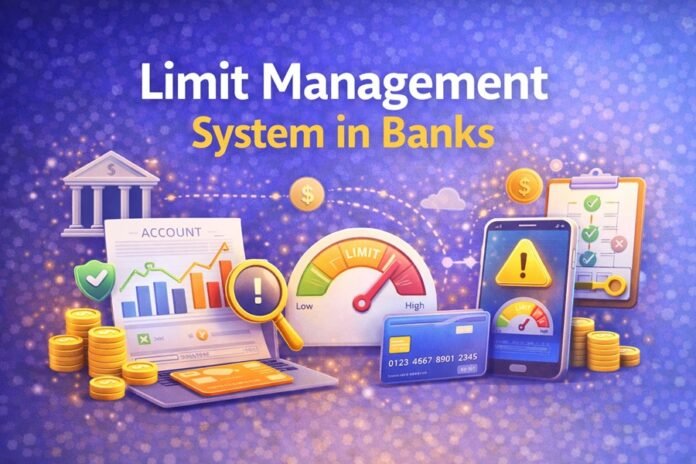
In the fast-paced world of digital finance, security and control are the twin pillars of a successful banking experience. As more users shift toward mobile and online platforms, financial institutions are deploying sophisticated tools to safeguard assets. One of the most critical components of this infrastructure is the limit management system in banks.
But what exactly is it, and how does it empower you as a customer? Let’s dive into the mechanics of how banks manage your transaction boundaries to ensure both safety and flexibility.
What is a Keyword Limit Management System in Banks?
A limit management system in banks is a centralized software framework used by financial institutions to set, monitor, and adjust the maximum value of transactions a user can perform. These “keywords” or “limit types” often refer to specific categories like Daily Transfer Limits, ATM Withdrawal Limits, or International Spending Limits.
By using a robust limit management system in banks, a financial institution can offer personalized banking experiences. For instance, a premium account holder might have a higher “Keyword” limit for corporate transfers compared to a standard savings account.
Key Features of Modern Limit Management
Most modern systems provide a multi-layered approach to managing your funds. Here are the core functionalities:
-
Transaction Control: Sets the minimum and maximum amount allowed per individual transaction.
-
Cumulative Limits: Tracks the total volume of money moved within a specific window (daily, weekly, or monthly).
-
Cooling Periods: Temporarily restricts large transfers to newly added beneficiaries to prevent “push payment” fraud.
-
Real-Time Monitoring: The limit management system in banks scans every transaction in milliseconds to ensure it aligns with the user’s risk profile.
Benefits for Customers and Institutions
The implementation of a limit management system in banks isn’t just about restriction; it’s about protection and operational efficiency.
-
Fraud Prevention: If a fraudster gains access to your credentials, the system prevents them from draining the account entirely by enforcing predefined limits.
-
Regulatory Compliance: Banks must adhere to anti-money laundering (AML) laws. A limit management system in banks helps flag unusual patterns that exceed typical thresholds.
-
User Autonomy: Many banks now allow users to adjust their own limits via mobile apps, providing a sense of control over their financial security.
Conclusion
As digital threats evolve, the limit management system in banks remains a vital line of defense. It balances the need for seamless, instant payments with the necessity of rigorous risk mitigation. By understanding how these limits work, you can better manage your liquidity while staying protected from unauthorized activities.