Pharmaceutical development programs depend on accurate molecular testing workflows to support drug discovery, biomarker research, translational studies, and regulatory submissions. Among the most widely used molecular techniques, qPCR Analysis provides a sensitive and quantitative measurement of nucleic acids across a wide range of pharmaceutical applications. The major steps in qPCR workflows used in pharmaceutical research are important for assay validation, quality control, and the development of emerging digital PCR technologies.
Sample Collection and Nucleic Acid Preparation
Sample quality plays a major role in the accuracy of molecular testing. Poor handling or improper storage conditions may damage nucleic acids and affect amplification performance. Pharmaceutical laboratories process several biological sample types, including:
- Blood
- Plasma
- Tissue samples
- Cultured cells
- Serum
- Biopsy material
Validated extraction methods are used to isolate DNA or RNA for downstream molecular analysis. The extraction process must consistently produce nucleic acids with sufficient purity and concentration for reliable amplification.
Assay Design and Method Development
Assay development supports sensitivity, specificity, and reproducibility. Scientists evaluate target sequences carefully to minimize nonspecific amplification and improve analytical precision.
- Primer Selection: Researchers design primers and probes that selectively amplify intended genomic targets.
- Target Identification: Scientists select therapeutic genes relevant to investigational studies.
- Reference Controls: Internal controls normalize biological variability across different sample populations.
- Reaction Optimization assays: Controlled reagent concentrations improve amplification efficiency in qPCR procedures.
Validated development practices support reliable bioanalysis throughout pharmaceutical testing environments.
Must Read: LC-MS Mass Spectrometry Role in Toxicology and Forensic Science
Workflow Setup and Amplification Process
qPCR workflows require controlled laboratory environments and calibrated instrumentation to maintain analytical consistency. During amplification, thermal cyclers repeatedly heat and cool reaction mixtures to denature DNA, anneal primers, and extend target sequences. Fluorescent dyes or probes monitor amplification in real time, allowing researchers to quantify nucleic acids throughout the reaction process.
Some of the important workflow components include:
- Calibrated thermal cyclers
- Positive and negative controls
- Standardized pipetting procedures
- Contamination-controlled workspaces
- Validated reagent preparation methods
Quantification and Data Analysis
Accurate interpretation remains essential during pharmaceutical investigations. Scientists evaluate findings carefully before reporting molecular results for review.
- Ct Interpretation: Cycle threshold values estimate molecular target concentration within biological samples.
- Standard Curves: Calibration curves support quantitative calculations during regulated testing procedures.
- Normalization Methods: Endogenous controls normalize variation during Copy Number qPCR investigations.
- Replicate Analysis: Multiple replicates improve statistical confidence.
- Quality Review: Independent analysts evaluate data consistency before final documentation activities.
Reliable interpretation practices strengthen consistency during pharmaceutical studies.
Copy Number Studies in Pharmaceutical Research
Genomic quantification supports several areas of translational and pharmaceutical research. Scientists use copy number analysis to evaluate chromosomal alterations associated with oncology therapies and inherited disorders.
Researchers also use genomic quantification for various applications, such as:
- Oncology research
- Gene therapy development
- Viral vector characterization
- Cell and gene therapy studies
- Rare disease investigations
A validated Copy Number Variation Assay requires accurate calibration and stable amplification efficiency throughout analysis. Careful interpretation helps scientists evaluate molecular variation during regulated pharmaceutical studies.
Role of Digital PCR in Advanced Pharmaceutical Testing
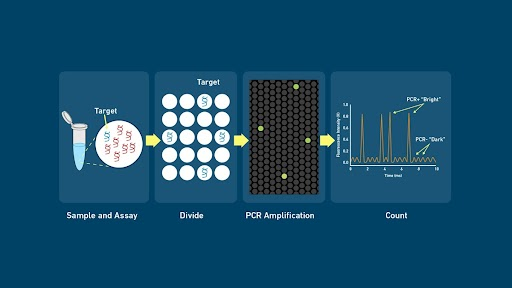
Some pharmaceutical applications require greater analytical sensitivity and precision than conventional qPCR methods can provide. Digital PCR technologies, including the ddPCR Method, partition samples into thousands of individual reactions, allowing highly sensitive target detection and precise molecular quantification. Some benefits include:
- Analytical Sensitivity: The ddPCR Method improves detection of low-abundance molecular targets during testing.
- Target Detection: Digital partitioning technologies support reliable evaluation of rare genomic material.
- Absolute Quantification: A validated ddPCR Assay supports direct molecular quantification without calibration curves.
- Workflow Differences: Digital workflows reduce reliance on relative amplification measurements during analysis.
These technical capabilities improve precision within regulated molecular testing environments.
Validation and Regulatory Considerations
Validation activities confirm that molecular methods are suitable for their intended application and capable of generating reliable data. Regulatory agencies such as the FDA and organizations, including the International Council for Harmonization (ICH), focus on the following parameters:
- Accuracy: Analytical procedures must measure target concentrations consistently across repeated evaluations.
- Precision: Reproducible findings improve confidence during independent analytical runs.
- Sensitivity: Laboratories establish the lowest detectable concentration during molecular testing.
- Specificity: Validation confirms that amplification occurs only within the intended genomic targets.
- Documentation Practices: Controlled records maintain traceability throughout laboratory operations.
- Regulatory Expectations: FDA, ICH, and GLP guidance support compliant workflows during TK Analysis activities.
Strong validation practices improve reliability across programs.
Common Workflow Challenges
Molecular testing workflows may encounter analytical and operational challenges that affect data reliability during pharmaceutical studies. Some common challenges include:
- Nucleic acid degradation caused by improper storage
- Sample contamination during handling
- Amplification inhibition from biological matrices
- Instrument calibration inconsistencies
- Reagent variability between manufacturing lots
- Data interpretation complexity
Careful monitoring practices strengthen long-term reliability within pharmaceutical molecular testing programs.
Conclusion
Validated molecular workflows are important for accurate genomic analysis throughout pharmaceutical development programs. Reliable qPCR Analysis supports biomarker research, gene expression studies, genomic quantification, and regulatory investigations across modern drug development activities. Optimized qPCR Assays, standardized interpretation procedures, and strong quality systems improve confidence in analytical findings. As pharmaceutical research continues to evolve, advanced technologies such as the ddPCR Method and validated Copy Number Variation Assay workflows are helping laboratories generate more precise and reproducible molecular data.